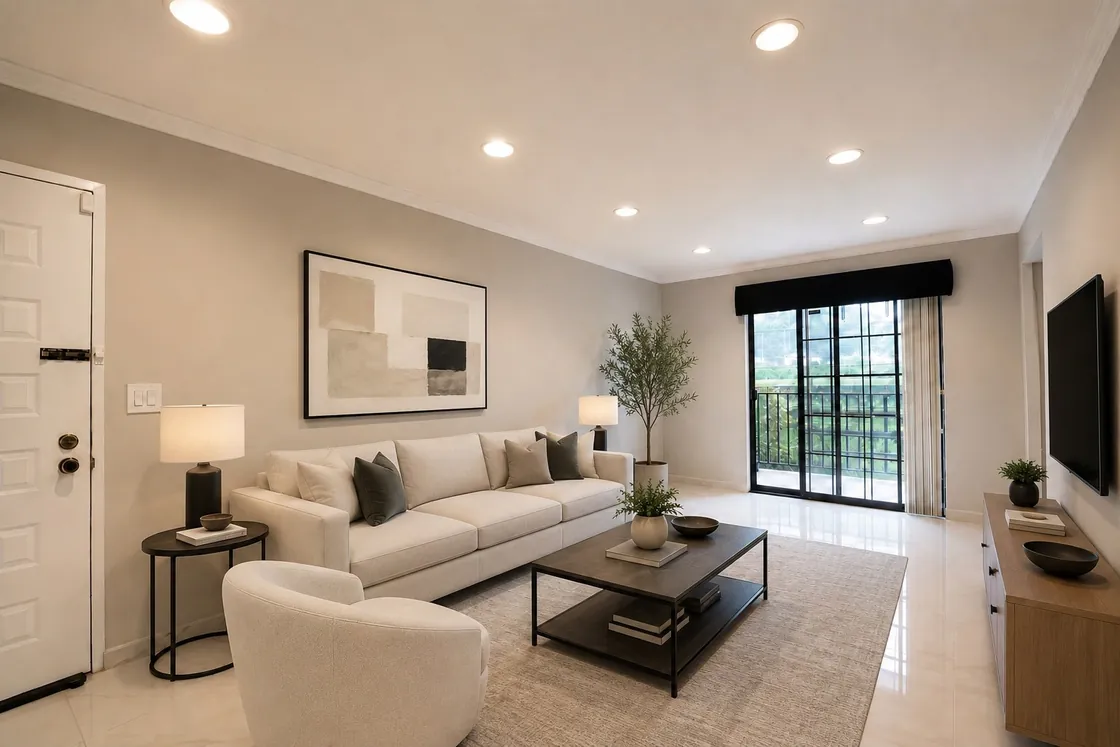

Virtual Staging
AI Virtual Staging for Real Estate: Why Empty Listings Are Costing You Buyers in 2026
Excerpt: Empty rooms don't sell homes. See why AI virtual staging has become standard in real estate marketing, how it actually works, and how EstateAI turns a single photo shoot into a complete, listing-ready property package without the fake, floating-furniture look of older staging tools.
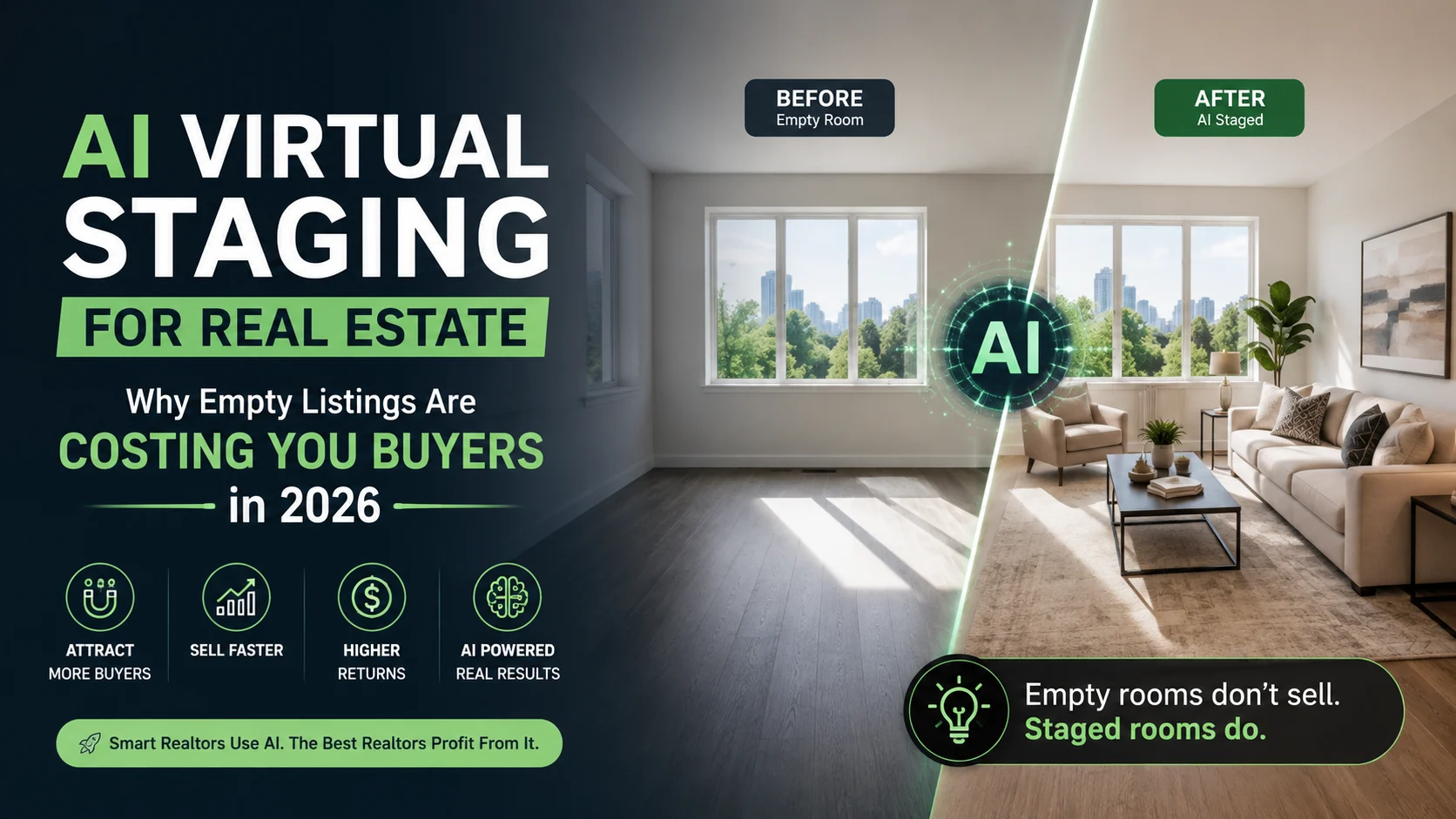
Walk into any empty house, and you'll feel it immediately — that flat, cold, "I can't picture myself here" feeling. Buyers feel it too, except they feel it from a thumbnail on their phone, three seconds before they scroll past your listing.
That's the real problem with unstaged photos. It's not that they're bad photos. It's that they ask the buyer to do work the buyer doesn't want to do — imagine a sofa, guess where the dining table goes, mentally fill four bare walls. Most people won't bother. They'll just move to the next listing that already did the imagining for them.
This is exactly why virtual staging stopped being a "nice extra" over the last couple of years and became more of a baseline expectation. Buyers now compare listings side by side on their phones, and a staged room simply reads as more finished, more serious, more worth a showing.
Why Agents Are Moving Away from Traditional Staging
Physical staging still has its place, but it comes with real friction: renting furniture, coordinating delivery trucks, paying a stager, and hoping the listing sells before the rental period ends. For a single property, that can run into thousands of dollars and days of lead time you don't always have.
AI virtual staging solves the same problem — helping a buyer visualize a space as lived-in — without the truck, the warehouse, or the week-long wait. You upload the photos you already have, and the room comes back furnished, styled, and ready to publish, usually within hours.
The bigger shift, though, isn't just speed or cost. It's realism. Early virtual staging had a reputation for looking obviously fake — furniture floating slightly off the floor, shadows pointing the wrong way, textures that looked plastic under close inspection. That reputation is outdated. Current AI staging tools preserve the room's actual architecture, perspective, and lighting, and place furniture that respects scale and shadow direction, so the result holds up even when a buyer zooms in.